
Have You Outgrown Your Brand? Refresh, Rebrand, or Fix the Website
Most established B2B companies that feel they have outgrown their brand have outgrown their website and their message, not their name or their logo. Here are the signs, what each one points to, a self-assessment you can run with your team, and a decision rule for refresh, rebrand or leave it.
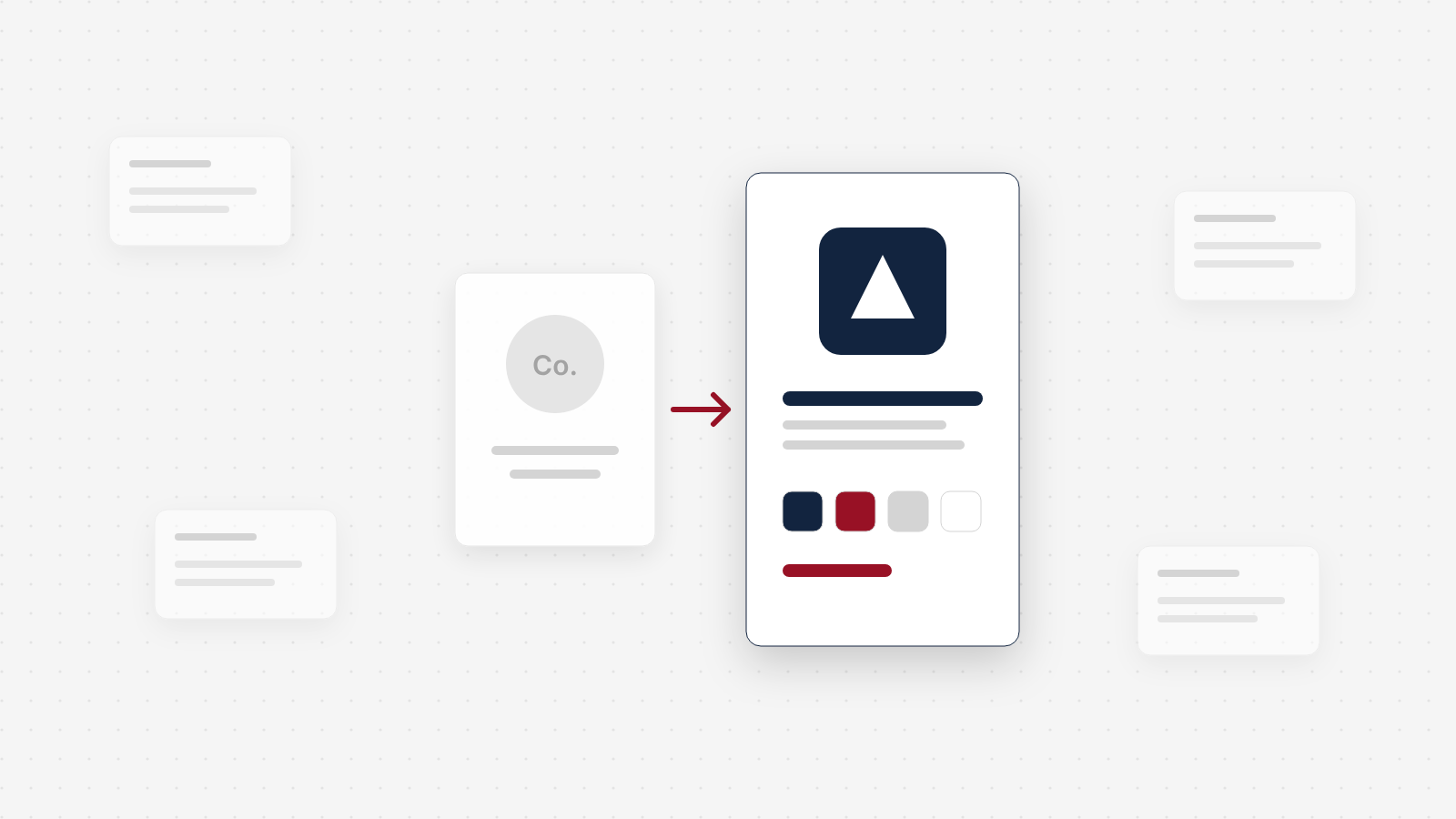
When the owner of an established B2B company tells us "we have outgrown our brand," the logo is rarely what they mean. What they mean is that the company sells more, to bigger buyers, than its public face suggests. Sales has to explain the company before they can sell it, and the website looks like the business from ten years ago. That is a real problem, but in most cases it is not a name problem or even a logo problem. It is a website and message problem, and it costs far less to fix. This article gives you the signs, what each one points to, a self-assessment to run with your team, and a plain rule for choosing between a website fix, a brand refresh and a full rebrand.
The short answer: three options, not two
Most guides frame this as brand refresh vs rebrand. For an established B2B company or manufacturer there are three options, and the cheapest one is the one most often skipped.
| Option | What changes | What stays | When it fits |
|---|---|---|---|
| Fix the website and the message | Positioning, website, sales materials, photos | Name, logo, colors | The identity is fine; the way you present the business is out of date |
| Brand refresh | All of the above, plus the logo drawing, colors, type and visual system | Name, and the recognizable core of the mark | The identity looks dated, breaks at small sizes, or no longer fits the company you are now |
| Full rebrand | Name, identity, position, often the domain | Your customers, if you plan it well | The name is wrong, confusing, legally exposed, or two companies are becoming one |
The decision rule we use:
- Change the name only if the name itself is the problem. It describes something you no longer do, it is confused with someone else, it has a trademark problem, or a merger needs one name. Feeling tired of it is not on the list.
- Refresh the identity only if it fails on its own. It looks wrong on your best possible page, it cannot be read at small sizes, or it cannot carry the company you are now.
- Otherwise, fix the website and the message, and keep everything the market already recognizes.
Most companies we talk to land on option three, or on three plus a light version of two. The rest of this article shows you how to tell which one you are.
Ten signs you have outgrown your brand
These are the signs owners and sales leaders describe, in their own words. The right-hand column is what each one usually points to. Count the column, not the signs.
| The sign | What it usually means | Points to |
|---|---|---|
| Sales has to explain what we do before they can sell it | The message has not kept up with the offer | Website and message |
| People apologize for the website before they send the link | The site, not the identity, is out of date | Website and message |
| We now sell to a different buyer (bigger accounts, engineers, procurement) | The site speaks to the old buyer | Website and message |
| Competitors with weaker offerings look more established | Presentation gap: photos, structure, proof | Website first, then test the identity |
| Every salesperson and distributor has their own version of our sales sheets | No system, not a wrong brand | Consistency (templates and guidelines) |
| The logo is unreadable as a favicon, a LinkedIn avatar or on an embroidered shirt | The mark is too detailed for where it is used now | Brand refresh |
| Our colors and type look like a different decade next to our best competitors | The identity has aged | Brand refresh |
| The name describes only part of what we make (for example, "Tool and Die" for a company that now ships assemblies) | The name is too narrow | Descriptor line first; name change only if that fails |
| We are often confused with another company, or a trademark problem has come up | The name cannot be defended | Rebrand |
| We merged with or bought another company and run two names | Two brands need one story | Rebrand or a deliberate family of brands |
One sign is missing on purpose: "the brand does not feel like us anymore." On its own, that tells you about the people inside the company, who see the logo every day. Buyers see it a few times a year. Treat that feeling as a reason to run the self-assessment below, not as a reason to rebrand.
Most of the time, it is the website
For a $2M to $20M B2B company, the identity is almost never judged on its own. Buyers see your logo on a page, and the page does most of the work. If the page is out of date, the whole brand reads as out of date, and owners blame the logo because it is the thing they can point at.
The research on how B2B buyers judge suppliers points the same way. When TREW Marketing asked engineers how strongly different factors signal a credible supplier, on a scale of 1 to 5, an informative and well-maintained website came first, ahead of recommendations from past customers. Awards and recognition, and an active presence on social media, came last, both scoring below 3 (TREW Marketing, 2025 State of Marketing to Engineers):
What engineers say signals a credible supplier
Note the wording: informative and well-maintained, not impressive. An older study found the same instinct in consumers. In a 2002 Stanford study for Consumer WebWatch, 2,684 people evaluated the credibility of real websites, and the design look of the site was the most frequently mentioned factor, in 46.1% of their comments (Consumer Reports, 2002). That study is old and not about B2B buying, so read it as a long-standing pattern: people judge a company's credibility by how its site looks and how current it is.
What this means for you: if most of your signs sit in the "website and message" column, a new logo will not fix them. A new logo on the same site still looks like the same out-of-date company. A rebuilt site on your existing identity, with real photos, a clear statement of what you make and for whom, and current proof, usually closes most of the gap. Our article on what manufacturing buyers check walks through exactly what that page has to show.
Most companies that feel they have outgrown their brand have outgrown their website. The fix is cheaper, and you keep everything the market already knows about you.
What a rebrand puts at risk
A rebrand has real costs beyond the design fee, and most of them are hidden from the people who approve it.
Recognition among buyers who are not shopping yet. Professor John Dawes of the Ehrenberg-Bass Institute, working with LinkedIn's B2B Institute, estimated that only about 5% of B2B buyers are in the market at any given time, which the B2B Institute calls the 95:5 rule (Marketing Week, 2021). The other 95% will buy later, and they will buy from a name they remember. Every name change resets some of that memory, and you never see the buyers who forgot you.
Recognition among current customers. The best-known warning is from consumer goods, so weigh it accordingly. When Tropicana replaced its familiar orange-with-a-straw carton in early 2009, unit sales fell 20% and dollar sales 19%, roughly $33 million, between January 1 and February 22, according to Information Resources Inc. data reported by Bloomberg (Bloomberg, 2009). Tropicana brought the old carton back within about two months. A B2B buyer reorders from a portal or a purchase order, not a store shelf, but the lesson carries: people find you by what they already recognize.
Search rankings. If a rebrand changes your domain or page addresses, Google treats it as a site move. Google's own guidance says to expect temporary ranking fluctuation during a move, that it can take a few weeks or more for a medium-sized site to settle, and to keep permanent (301 or 308) redirects in place for as long as possible, generally at least a year (Google Search Central). Every page that ranks today needs a redirect to its closest new page, not to the homepage.
Supplier records and paperwork. In B2B, your name lives in other people's systems: customers' approved-supplier lists and vendor portals, distributor catalogs, certificates issued by your registrar, insurance and tax forms. A name change means every one of those records has to be updated, and some customers will require you to re-register as a supplier. Ask your certification body and your largest customers what a name change involves before you commit to one.
None of this means never rebrand. It means a rebrand has to buy something worth more than what it puts at risk.
Decide in five steps
You can work through this in two or three working sessions with the owner, the head of sales and whoever runs marketing. The worksheet in the next section collects the answers.
Write down what you sell today, and to whom
Before anyone opens a design file, write two sentences: what you make or do, for which buyers and industries, at what scale, and why buyers pick you over the two competitors you meet most. If the leadership team cannot agree on those two sentences, no logo will help, and that disagreement is the real project.
How to do it
- Each person writes the two sentences alone, in five minutes, without discussion.
- Read them aloud. Circle the words that appear in most versions; those are your position.
- Underline the claims that only one person made. Those are either new direction or wishful thinking; decide which.
- Compare the agreed version with your current homepage headline. The gap between them is the size of your message problem.
See a worked example
This is an illustrative example, not a client. A company founded as "[Founder] Tool and Die" now does tooling, but most of its revenue comes from precision stampings and light assemblies for medical device makers. The agreed sentences: "We make precision metal stampings and assemblies for medical device and lab equipment makers, from prototype to 250,000-piece runs. Buyers pick us because our tooling is built in-house, so engineering changes take days, not weeks." Their homepage still says "Quality tooling since 1987." That gap is the problem, and it is a message problem first.
Steal our AI prompt
I own a B2B company. Below are our current homepage text, our last 12 months of revenue split by product line or service, and a short description of our three biggest customers (industry, size, what they buy). Write two sentences that describe what we sell today, to whom, at what scale, and why buyers pick us. Then list every place where our homepage describes a different company than the one in those two sentences. Homepage: [paste]. Revenue split: [paste]. Top customers: [describe]
Ask the people who buy from you, not only the people who work for you
The team sees the brand every day and is usually the most tired of it. Customers see it a few times a year and often remember it better than you expect. Before you change anything, find out what they recognize, what they would miss, and what they think you do.
How to do it
- Call five customers who started buying in the last two years and five long-standing ones. A 15-minute call each is enough.
- Ask three questions: "How would you describe what we do to a colleague?", "What made you choose us?" and "When you picture our company, what comes to mind?"
- Write down their exact words. If they describe you more broadly or more accurately than your website does, the site is behind the business. If they still describe the old company, the market needs to be told, which is a message job.
- Note what they recognize: the name, a color, a truck, a person. Whatever they mention unprompted is equity. Keep it.
Separate the brand from the website: the logo-swap test
This is the test that settles most "is it the brand or the site" arguments in ten minutes.
How to do it
- Take a full-page screenshot of the homepage of the competitor whose site your team most admires.
- In any image editor, or in a slide, cover their logo with yours.
- Show the result to three people who know your business. Ask: "Does this look like a company you would trust with a large order?"
- If the answer is yes, your identity is not the problem. The site, the photos and the message are, and you are in the "fix the website" column.
- If your logo looks out of place even on their page (too detailed, wrong era, unreadable small), the identity needs a refresh too.
Run the small-size check too
Put your logo at 32 pixels wide (browser tab size), at 100 pixels (a LinkedIn avatar), and in one color only (an embroidered shirt or a laser-etched part). If it cannot be read at those sizes, that is a refresh job, usually a simplification rather than a new mark. Many large companies have simplified detailed marks into flatter ones for exactly this reason: the logo now has to work on a phone screen and a social avatar, not only on a letterhead.
List everything that carries the brand, and what changing it would cost
Owners are often surprised that the design is the small part of the bill. The rollout is the big part, and it scales with how many physical things carry your logo.
How to do it
- Walk the building and the parking lot, then open the shared drive. List every place the logo or name appears: website, email signatures, quote and invoice templates, spec sheets, packaging, labels, signage, vehicles, uniforms, trade show booth, directory listings, certificates.
- Next to each, mark whether it needs to change for a website fix, for a refresh, or for a full rebrand. A website fix touches the first few rows. A rebrand touches all of them.
- Mark items you can replace on their normal cycle (uniforms, printed brochures, the next trade show booth) versus items that must change on launch day (website, email, quote templates).
- Get rough prices for the big physical items. That number belongs next to the design estimate when you decide.
Agree what success looks like before you start
A brand project with no agreed measure ends in an argument about taste. Pick two or three numbers that should move if the change works, and record where they are today: website inquiries or RFQs a month, the share of first sales calls spent explaining what you do, win rate against your main competitor, how many qualified buyers reach the quote stage.
Write them down with a date. Check them at 90 days and at six months. If you choose the website route, this is also how you hold your agency to account; it is the same way we scope the Conversion System, with the baseline and the metric agreed in writing before work begins.
The self-assessment worksheet
Copy it, fill it in with the owner, the head of sales and whoever runs marketing, then count the checks in each part. The part with the most checks is where to start.
Have we outgrown our brand? A self-assessment for B2B companies
Our position, in two sentences
- What we make or do, for which buyers, at what scale: ______
- Why buyers pick us over our two most frequent competitors: ______
Part A. Website and message signs (check each that is true)
- Sales has to explain what we do before they can sell it
- Someone in the company apologized for the website in the last six months
- Our homepage headline does not match the two sentences above
- The website does not mention our largest or fastest-growing product line or industry
- The photos on the site are stock, or more than five years old
- Customers describe us more broadly or more accurately than the website does
- Competitors with weaker offerings look more established online
Part B. Identity signs
- In the logo-swap test, our logo still looked out of place on a strong competitor's page
- The logo is hard to read as a browser tab icon, a LinkedIn avatar or in one color
- Our colors and type look dated next to our best two competitors
- We cannot produce a clean, current logo file without asking around
Part C. Name signs
- Our name describes something we no longer mainly do, and a descriptor line will not fix it
- We are regularly confused with another company
- We have, or expect, a trademark or legal problem with the name
- We are bringing two or more company names together
Part D. Consistency signs
- Sales sheets, quotes and decks look different depending on who made them
- Distributors or dealers use old logos or their own versions of our materials
- We have no brand guidelines, or nobody knows where they are
What we would lose (answer before deciding)
- What customers recognize us by, in their own words: ______
- Pages that bring us search traffic today: ______
- Records that carry our name (supplier portals, certificates, directories): ______
Result
- Mostly A: fix the website and the message. Keep the identity.
- A plus some B: fix the website and refresh the identity inside the same project.
- Any of C: consider a rebrand, and clear the name before designing anything.
- Mostly D: you need a system (templates, guidelines, one owner), not a new brand.
How we will know it worked (today's number, and the date we will check)
- Monthly inquiries or RFQs: ______
- Win rate against our main competitor: ______
- Another measure: ______
If you do change it: the B2B rebrand rollout checklist
If the worksheet points to a refresh or a rebrand, this is the rollout. Most consumer-focused checklists cover the logo, the website and social media. A B2B company has more places where its name is load-bearing.
B2B brand refresh and rebrand rollout checklist
Before you design (rebrand only)
- Run a knockout search for the new name in the USPTO trademark search, then have a trademark attorney clear it
- Check the domain and the main social handles are available
- Ask the certification body what a name change involves for each certificate
- Ask your three largest customers what a supplier name change involves in their systems
Before launch
- List every current URL, not just the pages with search traffic or links, and note which new page replaces each one
- Set up permanent 301 redirects for every URL that has a real replacement, let pages you are dropping with no replacement return a 404, and test it all before launch
- Brief sales, customer service and anyone who answers the phone, with a two-line explanation of what changed and why
- Tell key customers, distributors and dealers personally before it is public
- Prepare new quote, invoice and email signature templates
Launch day
- Website live, redirects working, analytics recording
- Email signatures, quote and invoice templates switched
- Google Business Profile, LinkedIn and industry directory listings updated
- "Formerly [old name]" visible on the website and in signatures (rebrand only)
- If the domain changed: use the Change of Address tool in Google Search Console
First 90 days
- Spec sheets, line cards and datasheets reissued with revision dates
- Distributor and dealer catalogs, portals and price lists updated
- Customer supplier records and portals updated; certificates reissued if needed
- Search Console checked weekly for errors on old addresses
- Success measures checked against the baseline
On the normal replacement cycle
- Signage, vehicles, uniforms, packaging and labels
- Trade show booth and printed brochures
Keep in place
- Redirects from old addresses for at least a year, longer if old links still bring visitors
- The old domain registered, so nobody else can buy it
Two resources for the search side: Google's guide to site moves with URL changes and its help page on the Change of Address tool, which only applies when the domain itself changes and keeps forwarding signals for 180 days. If the website is part of the change, our website redesign checklist covers the rest of the launch.
Keep it from drifting again
Many companies that think they have outgrown their brand have actually let it drift: five versions of the logo on the shared drive, a sales sheet every salesperson edited for themselves, a distributor still using the 2015 catalog. A new brand drifts the same way unless someone stops it. Four habits stop it:
- One page of guidelines, not a 60-page book. The logo files and where each is used, the colors with their codes, the fonts, three example layouts, and the two sentences from step one. Put it where every employee and vendor can find it.
- Templates for the documents sales actually sends. Quotes, line cards, spec sheets, the capabilities deck and the email signature. When the template is easier than making your own, people use the template.
- Give vendors and distributors the files. Every agency, printer, sign shop and distributor gets the guidelines and the logo files with the order, written into the agreement where you can.
- One owner. One person approves anything external that carries the logo. In a company your size that is often the marketing lead or the owner. Without an owner, consistency is everyone's job, so it is nobody's.
When to leave your brand alone
Sometimes the honest answer is: change nothing, or almost nothing.
Leave it alone if the signs come only from inside the company. If customers describe you accurately, the logo passes the swap test and the small-size check, and inquiries are healthy, the feeling of being tired of the brand is not a business problem.
Leave the name alone if a descriptor line can do the job. "[Founder] Tool and Die: precision stampings and assemblies" (an illustrative name) is cheaper and safer than a new name, and it keeps everything the market already knows.
Do not rebrand to fix a sales problem that lives somewhere else. If quotes take a week to go out, if the price is wrong, or if the team does not follow up, a new identity will not change the result, and it will use up the budget that could have fixed those things.
And do not rebrand right before a sale of the business or a leadership change unless the new owners want it. A new name is a commitment they should make themselves.
If you are not sure which column you are in, our free Conversion Leak Scorecard scores your website on seven signals from its URL, which is a quick way to see whether the site is what is holding the brand back. For the case that brand work pays at all in B2B, see brand as a B2B growth lever.
Brand refresh and rebrand questions owners ask
What is the difference between a brand refresh and a rebrand?
A brand refresh keeps your name and the recognizable core of your identity and updates how it is expressed: the logo drawing, colors, type, photography and messaging. A rebrand changes who the market thinks you are, usually with a new name, a new identity and a new position. For an established B2B company, a refresh keeps the recognition you have built; a rebrand starts much of it over. There is a third option most guides skip: keep the identity and rebuild the website and sales materials around what you sell today.
How do I know if my company has outgrown its brand?
Look for signs in how you sell, not in how the logo makes you feel. Sales has to explain what you do before they can sell it. People apologize for the website before they send the link. You now sell to a different buyer, or your name describes only part of what you make. Competitors with weaker offerings look more established. If most of your signs are about the website and the message, fix those first. A name change is only worth it when the name itself is wrong, confusing or legally exposed.
Our competitors look more professional than us. Is it the brand or the website?
Usually the website. Run the logo-swap test: put your logo on a screenshot of your strongest competitor's homepage. If it suddenly looks like a company you would buy from, your identity is not the problem; the site, the photos and the message are. If your logo still looks out of place on their page, the identity needs a refresh too.
Should we change our company name?
Rarely. For an established B2B company, the name carries years of recognition with customers, distributors, search engines and the buyers who are not in the market today but will be. Change it only when it describes something you no longer do, is confused with another company, has a legal or trademark problem, or after a merger that has to bring two names together. A descriptor line under the name often solves the first case without a name change.
Will we lose customers or Google rankings if we rebrand?
You can lose some of both if the rollout is careless, and keep nearly all of both if it is planned. Tell key customers and distributors before the change is public, and keep the old name visible for a while (for example, formerly known as). If the domain or page addresses change, redirect each old address to the new page that replaces it, with permanent 301 redirects. Google expects temporary ranking changes during a site move and recommends keeping redirects for at least a year.
Should we do the brand or the website first?
Decide the message first, then the identity, then build the website on both. Positioning (what you sell, to whom, and why you) has to come before any design. If the identity only needs a light refresh, it can run inside the website project. If you are changing the name, settle and clear it before you design anything, because everything else depends on it.
What has to be updated in a B2B rebrand?
More than the logo. The website and its redirects, email signatures, quote and invoice templates, spec sheets and line cards, certificates and supplier registrations, distributor and dealer materials, directory listings such as Google Business Profile and industry directories, LinkedIn, trade show assets, signage, vehicles, uniforms and packaging. List everything that carries the logo before you approve a design, because the rollout usually costs more than the design.
How much does it cost to fix the website instead of rebranding?
It depends on scope, but it is usually the more contained of the two, because it does not touch signage, vehicles or packaging. Our Conversion System is a fixed eight-week rebuild starting at $35,000, with a guarantee: we agree your baseline conversion rate before we start and design to double it within 90 days of launch, or we keep working at our cost. Our recent focused rebuilds have run $35,000 to $70,000, and larger builds $200,000 to $350,000.
Keep reading
 Branding & Digital Marketing
Brand Is a B2B Growth Lever, Not a Paint Job
Brand gets filed under the soft stuff right up until you see the numbers. Here is the business case for brand in B2B and manufacturing, and how to run it like the revenue engine it is.
 Branding & Digital Marketing
How to Write a B2B Tagline and Positioning Line: A 5-Part Formula
Most B2B taglines are interchangeable: quality, innovation, partnership. Here is a 5-part formula for writing the one line that tells a buyer what you make, who it is for and why you, plus the tests that catch a weak line before it goes on your homepage.
 Branding & Digital Marketing
How to Name (or Rename) a B2B Company: 5 Ways, the Tests, and the Legal Checks
In B2B, naming usually comes up during a rebrand: a merger, a new market, a name that no longer fits. Here are five ways to build a name, the tests that weed out weak ones, how to rename without losing what you built, and the trademark checks from a patent attorney.
See exactly where your site is losing conversions
Paste your URL and get an instant conversion score. No form to fill out, no sales call.
Strategies for businesses building what's next.
The Next Draft: occasional notes on turning B2B websites into pipeline. Unsubscribe any time.