
How to Choose a Web Design Agency, by What It Will Answer For
Most guides tell you to choose a web design agency by its portfolio and reviews. That tells you who can make a site look good. These seven questions tell you who will answer for the result, with a free scorecard to compare agencies side by side.
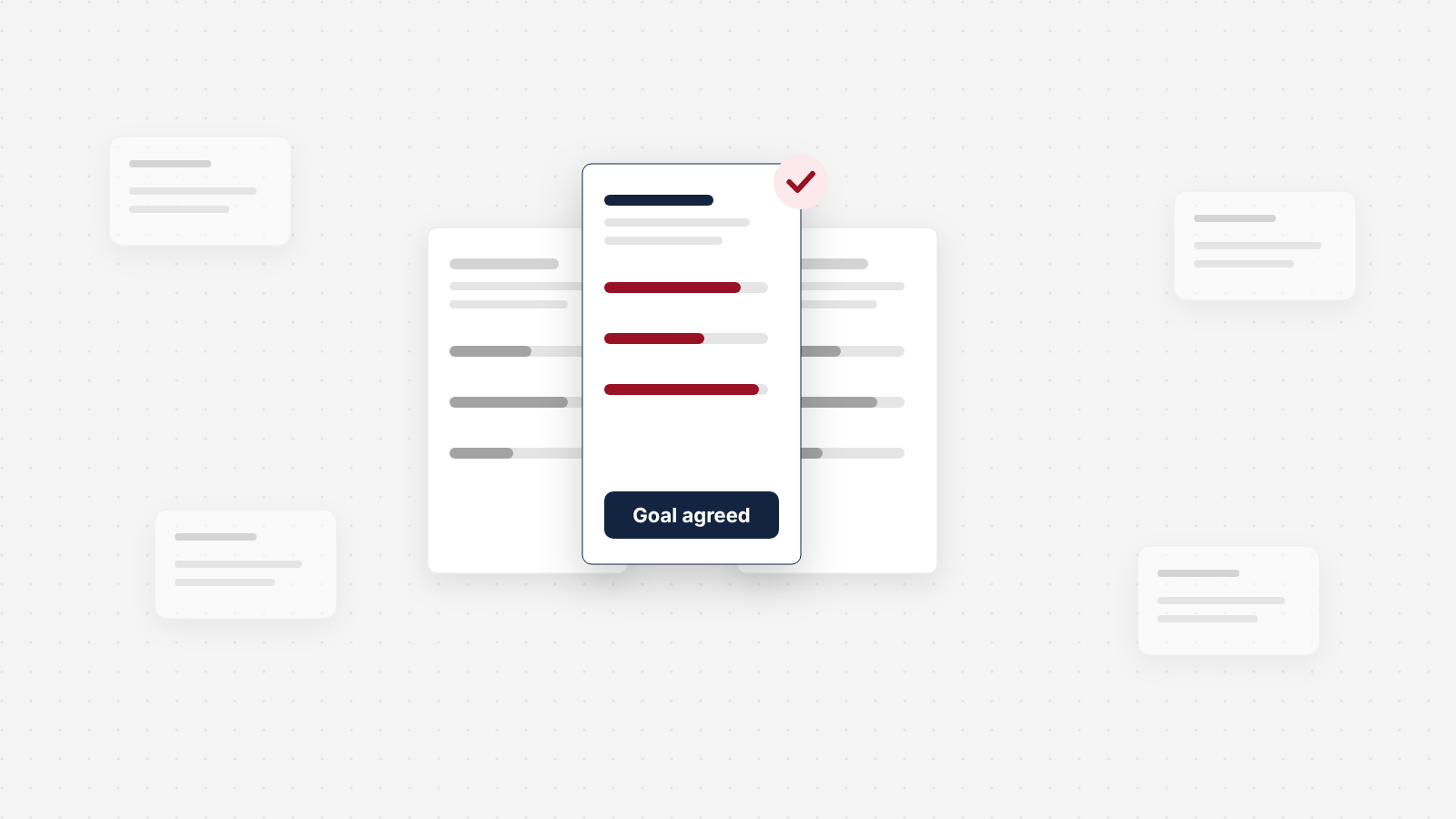
Most advice on how to choose a web design agency comes down to taste and trust: look at the portfolio, read the reviews, see if you like them on a call. Those things tell you whether an agency can make a site look good. They do not tell you whether the site will bring in more qualified inquiries, or what the agency will do if it does not. For a B2B company or a manufacturer, that second question is the whole reason to spend the money. So choose on accountability. Ask every agency the same seven questions, score the answers, and pick the one willing to be measured.
How to choose a web design agency, in short
To choose a web design agency, write down the number your website should move, shortlist three to five agencies, and ask each one these seven questions:
- What number will you commit to, and what happens if you miss it?
- How do you price the work, and who pays if it runs over?
- Can you show a site like ours that produced more qualified inquiries?
- Who will actually do the work?
- What do you need from us, and how many hours?
- Who owns the site, the domain and the accounts when you are done?
- What happens in month three after launch?
Score every answer on the same sheet (there is a free scorecard below), check references with the top two, and choose. The rest of this guide explains what a good answer to each question sounds like, and what a weak one sounds like.
This is written for owners and leaders of B2B companies and manufacturers doing roughly $2M to $20M a year, where the owner is often also the marketing department and the website has to produce RFQs and inquiries, not just look current.
Why a portfolio and reviews are not enough
Most people find a web designer the same way they find a plumber. GoDaddy asked small-business owners who had hired a web designer or developer how they found one, in an online survey of 204 owners plus interviews with 18 (GoDaddy, 2022). Recommendations from other professionals led, at 60%, ahead of Google or other search at 51% and recommendations from friends at 46%. It is a small-business sample from a company that sells to web designers, and the shares add up to well over 100%, so owners used more than one method. Read it as direction, not a rule for B2B buyers.
How small-business owners found the web pro they hired
Referrals, reviews and a portfolio are a fine way to build a long list. They are a poor way to make the final choice, because none of them answer the question you are actually paying for: will the new site bring in more of the right inquiries? A referral tells you the last client was happy with the experience. A portfolio tells you the designer has taste. Neither tells you whether anyone measured what the site did after launch.
That question matters more every year, because your website now does much of the selling before anyone calls you. In a Gartner survey of 646 B2B buyers, conducted in August and September 2025, 67% said they prefer a rep-free buying experience (Gartner, March 2026). That is stated preference, not observed behavior, but the direction is clear. A buyer comparing suppliers will often judge you on the site alone. Your agency is building a sales tool, so judge it the way you would judge a sales hire: on what it will commit to.
A portfolio shows you what an agency can make. Only its answer to "what if the number does not move?" shows you what it will answer for.
Seven questions to ask a web design agency
Ask these on the first call, in this order, and write the answers down while they are fresh. The first three do most of the work. An agency that answers them clearly and specifically is rare, and the ones that cannot will usually show it within the first fifteen minutes.
What number will you commit to, and what happens if you miss it?
None of the selection guides we read before writing this one tell you to ask it, and it is the question that sorts agencies fastest. You are not asking for a promise. You are asking whether the agency will agree a baseline with you, name a target, and say in writing what it does if the site launches on time and the number does not move.
Be precise about which number. A guarantee on search rankings is a warning sign, not a strength. Google's own guidance on hiring help says that "No one can guarantee a #1 ranking on Google," and that if someone guarantees first place in search results, you should find someone else (Google Search Central). A commitment on your conversion rate or qualified inquiries is a different thing, because the agency controls much of what moves it: the message, the page structure, the inquiry path and the forms.
How to do it
- Before the call, write down the one number the site should move. For most B2B companies it is qualified inquiries a month. For a manufacturer it is often RFQs.
- Ask: "If we agree a baseline today, what target would you commit to, and over what window after launch?"
- Then ask: "What happens if you miss it?" Listen for a specific remedy: continued work at the agency's cost, part of the fee held back, or something else it defines.
- Ask how the baseline will be measured: what counts as a qualified inquiry, which tool, and what happens if your traffic changes for reasons that have nothing to do with the site.
See a strong answer and a weak one
Weak: "We can't guarantee results, but our sites look great and our clients love them." This may be honest, but it means nobody is measuring what you are paying for.
Weak in a different way: "We guarantee you'll double your leads." With no baseline, no definition of a lead and no window, this promise cannot be checked, so it cannot be enforced.
Strong: "Your site converts about [X]% of visits into qualified inquiries today, based on the last 12 months in your CRM. We'll design to reach [Y]% within 90 days of launch, on comparable traffic. If we miss, we keep working at our cost until we hit it." Every part of that can be checked.
Steal our AI prompt
I'm choosing a web design agency for a B2B company. Below are the proposals or call notes from each agency I'm considering. For each one, pull out exactly what it commits to: the metric, the baseline, the target, the time window, how it will be measured, and what happens if the target is missed. Mark anything vague or missing as "not stated." Then rank the agencies by how specific and checkable their commitment is, and list the follow-up questions I should ask each one. Proposals: [paste]
An honest "we won't guarantee a number" is not automatically a dealbreaker. An agency does not control your sales follow-up, your pricing or your ad budget. But then ask how it will report against your number, and how often. A guarantee nobody has defined is worse than none. Our docs guide to red flags in a website proposal shows what a defined one looks like.
For disclosure, we are an agency, and here is how we answer this question for The Conversion System, our 8-week rebuild: "Before we start, we agree the baseline conversion rate and the exact metric we're moving, on comparable traffic. We design to double it within 90 days of launch. If we don't, we keep working at our cost until we do." Hold us to the same test you hold everyone else to.
How do you price the work, and who pays if it runs over?
How a project is priced decides who carries the risk when something takes longer than planned. There are three common models, and the differences matter more than the headline number:
- Hourly. You pay for time. Every overrun is yours, and the agency earns more when the project runs long. That incentive points the wrong way for a defined build.
- Fixed price against a written scope. You pay an agreed fee for agreed work. Overruns on that scope are the agency's problem, which is why fixed quotes can look higher: the risk is priced in. Ask how changes to the scope are priced, because that is where fixed projects get expensive.
- Fixed price tied to a measurable goal. The same as above, plus a target and a remedy if it is missed (question 1).
Also ask what is not in the price. Content writing, product data, integrations with your CRM or ERP, and the redirect plan that protects your search traffic are the items most often left out of a low quote and billed later. Our breakdown of what a B2B website redesign really costs shows what moves a quote, and what our own projects have cost.
For disclosure, here is how we price. Our projects start at $35,000. Recent focused rebuilds have run from $35,000 to $70,000, and larger builds from $200,000 to $350,000. We price fixed scope, sprints or monthly retainers against agreed, measurable goals. We do not bill by the hour, and we do not sell blocks of "included hours."
Can you show a site like ours that produced more qualified inquiries?
Ask for proof in your own terms: a company that sells something like you do, to buyers like yours, and a number that moved after launch. "Like ours" matters more for a manufacturer than for most businesses, because a manufacturer's site has jobs a generic marketing site does not. Buyers need spec sheets and drawings. Estimators need an RFQ form that captures material, quantity and files. Distributors need to be found without being undercut. An agency that has never built those will learn them on your budget.
How to do it
- Ask for two case studies from companies in your industry or with a similar sales process (RFQ, distributor, long buying cycle).
- For each, ask: what was the number before, what was it after, over what window, and where does the number come from?
- Ask what else changed at the same time. A new sales hire or a bigger ad budget can move inquiries as much as a new site.
- Ask to speak to the client. If the agency will not offer a reference for its best case study, weigh the case study accordingly.
See a worked example
When we rebuilt the site for Telling Industries, a manufacturer with a technically complex product line, the work centered on helping buyers find and specify the right product, including a custom product configurator built alongside the full site rebuild. Qualified leads tripled after launch. That is the shape of answer to look for from any agency: the client, what was built, and the number that changed.
Who will actually do the work?
The people in the pitch are not always the people on the project. Ask for the names and roles of everyone who will work on your site, and whether any of the work is subcontracted or sent to freelancers. Subcontracting is not wrong in itself, but you should know who touches your site and who answers for it.
This matters most when the timeline is tight. Every project trades off cost, quality and time, and you can usually fix two of the three. If you need a site fast, an agency may bring in extra people who know nothing about your business. The better move is often to simplify the scope for launch and add the rest after, so the same team does the work.
Ask one more thing: who is your day-to-day contact, and who makes the call when you disagree with a design decision? If the answer is "the account manager" for both, ask to meet the person who does the work.
What do you need from us, and how many hours?
Every website project is partly a list of things only you can provide: access to your accounts, your baseline numbers, product data, approvals, and time with the people who talk to customers. A good agency tells you up front what it needs and roughly how many hours it will take, so you can put them on the calendar. A vague answer here is how an eight-week project becomes a five-month one.
For disclosure, on our Conversion System projects a client's team typically spends around 40 hours with us across the project, in interviews, reviews and approvals. Use that as a yardstick when another agency says it needs "very little" of your time, and ask what it plans to do instead of talking to you.
Also ask how many people on your side need to approve the work. Name one decision maker before you sign. Every extra approver adds a round of feedback.
Who owns the site, the domain and the accounts when you are done?
This is the question owners forget to ask until they try to leave an agency. Your domain, hosting, analytics, Google Search Console and CRM forms should be in your company's name, with the agency given access, not the other way round. The contract should say who owns the finished design, code and content once you have paid.
The domain is the one that bites hardest. ICANN, which oversees domain names, defines the registrant as "the person or entity that holds the rights to a domain name," and warns that if a developer registered the domain for you, "they may have registered the domain name using their own contact details," and may be "listed as the official Registrant of record" (ICANN). In that case you may need proof of payment to get it back.
How to do it
- Look up your domain in ICANN Lookup and check the registrant. If the details are hidden by a privacy service, log in to your registrar account, or ask whoever holds it.
- List every account the site depends on: domain, hosting, analytics, Search Console, CRM, form tools, email sending. Write down whose name each one is in.
- Ask each shortlisted agency: "When the project ends, or if we part ways, what do we get, and how long does the handover take?" A good answer is specific: logins, code, content and documentation, on a date.
Tools to use
ICANN Lookup to see the registration details for your domain, and our docs guide on owning your website accounts, which lists the accounts to control and how to fix gaps before a new project starts.
What happens in month three after launch?
Launch is not the finish line. It is when you start finding out whether the site works. Ask each agency what it does in the first 90 days: who checks the number against the baseline, who fixes a broken form or a missed redirect, and what ongoing care costs after that.
Then ask how support works. Some owners want a chat channel and an instant answer; some are happy with a ticket and a scheduled call. Neither is wrong, but you should know which you are buying, what the minimum commitment is, and what happens if you stop.
For disclosure, here is ours. Our care plans have a 3-month minimum. Support runs through email, scheduled meetings and tickets. We do not offer Slack support or a 24/7 line, and we would rather say so before you sign than after.
The free web design agency scorecard
Copy it into a document or a spreadsheet. There is no form and no email gate. Agree the weights before your first call, have each person on your side score on their own, then compare. Replace everything in square brackets.
Web design agency scorecard
Web design agency scorecard: [Company name]
The number our website must move: [for example, qualified inquiries or RFQs a month]. Today: [number, 12-month average]. Source: [CRM, inbox, analytics].
Scored by: [name]. Date: [date].
How to score
Score each agency from 1 (weak or no answer) to 5 (specific, checkable answer) on each line. Multiply the score by the weight and add up the column. The best possible total is 500. Change the weights to suit you, but keep them adding up to 100, and set them before the first call.
| Criterion | Weight | [Agency A] | [Agency B] | [Agency C] |
|---|---|---|---|---|
| 1. Commits to a number, and says what happens if it misses | 20 | |||
| 2. Pricing model, what is included, how changes are priced | 15 | |||
| 3. Proof: a site like ours that produced more qualified inquiries | 20 | |||
| 4. Named team, and who does the work | 10 | |||
| 5. Clear about what it needs from us, in hours | 5 | |||
| 6. We own the domain, accounts, design, code and content | 10 | |||
| 7. A plan for the first 90 days and ongoing care | 10 | |||
| 8. References confirm the story | 10 | |||
| Weighted total (out of 500) | 100 |
Dealbreakers, whatever the total: a 1 on line 6 (ownership), or a guarantee of search rankings.
What a 5 looks like
- Commitment: a named metric, a baseline, a target, a window after launch, how it is measured, and a written remedy if missed.
- Pricing: a fixed price against a written scope, with exclusions listed and a rule for pricing changes.
- Proof: a comparable client, the number before and after, the window, and a reference you can call.
- Team: names and roles of the people doing the work; any subcontracting disclosed.
- Our time: a list of what the agency needs from us and an estimate in hours.
- Ownership: everything in our company's name; a written handover of logins, code, content and documentation.
- After launch: who measures against the baseline at 30, 60 and 90 days, what care costs, the minimum term, and how support works.
- References: two clients who confirm the result and would hire the agency again.
The seven questions, to read out on the call
- What number will you commit to, and what happens if you miss it?
- How do you price the work, and who pays if it runs over?
- Can you show a site like ours that produced more qualified inquiries?
- Who will actually do the work?
- What do you need from us, and how many hours?
- Who owns the site, the domain and the accounts when you are done?
- What happens in month three after launch?
Reference check questions
- What was the number the site was meant to move, and what happened to it after launch?
- Did the project finish on the agreed price? If not, why?
- Who did the work day to day, and were they the people you met in the pitch?
- What was it like when something went wrong?
- Do you own all your accounts and files today?
- Would you hire them again for the same project?
How to run the search, step by step
Here is the order we would run it in, if we were on your side of the table.
- Write down your baseline. Twelve months of qualified inquiries and RFQs from your CRM or inbox, and your conversion rate if you know it. If tracking was never set up, write "unknown." That is an honest starting point, and it tells agencies measurement comes first.
- Build a long list. Ask peers in your industry, look at sites you admire from companies like yours, and check who built them. Drop any agency whose case studies show no numbers at all.
- Shortlist three to five. FatLab Web Support calls three to five the practical range for most organizations (FatLab Web Support). Fewer and you have nothing to compare; more and the calls eat your month.
- Send a short brief, or an RFP. For a larger project with several agencies, our website redesign RFP template puts your baseline and target at the center, so agencies bid on your number instead of a page count. For a smaller one, a two-page brief and a call is enough.
- Hold the calls and ask the seven questions. Score on your own, straight after each call, before you talk to anyone else.
- Check references for the top two. Use the reference questions in the scorecard. Ask the client, not the agency, what happened to the number.
- Read the proposal against the red flags, then decide. If two agencies are close, choose the one whose commitment you could actually check in 90 days.
Agency, freelancer or in-house developer?
Not every company needs an agency. The right answer depends on the job.
- A freelancer can be the right call for a small, well-defined task on a site that already works: a new landing page, a plugin update, a set of copy changes. Check code samples or past sites, and make sure your company owns every account they touch.
- An in-house developer makes sense when you have a steady stream of website work for years, and someone on staff who can manage them. Hiring takes time, and if you do not have a technical background, get someone who does to help you assess candidates. A live test on a realistic task tells you more than a resume.
- An agency fits when the site has to do a business job (more inquiries, a new market, a product line buyers cannot understand) and you need strategy, content, design, development and measurement from one team that answers for the result. That is the case this guide is written for.
Whichever you choose, questions 4 to 7 above still apply. Who does the work, what they need from you, who owns the accounts, and what happens after launch are the same questions for a freelancer or a new hire.
When this approach does not fit
If your project is small, say a few page updates or a refresh of a site that already brings in steady inquiries, seven questions and a weighted scorecard are more process than you need. Ask questions 2, 4 and 6, and get on with it.
An agency that will not commit to a number is not automatically the wrong agency, either. Some excellent agencies are uneasy about guarantees because so much of the result depends on the client. If you like everything else about them, ask how they will report against your number, and how often, and score that answer instead.
And no agency can fix what happens after the inquiry arrives. If quotes take a week to go out, a better website sends you more requests that still go cold. A commitment to a number is fairest when you hold up your side: answer inquiries quickly, keep traffic comparable, and give the agency access to the data.
Questions owners ask about choosing an agency
How many web design agencies should I talk to?
Three to five. FatLab Web Support calls three to five the practical range for most organizations, and we agree. Fewer than three and you have nothing to compare. More than five and you spend weeks on calls and proposals, and the agencies you most want may decide the odds are not worth their time.
Should I tell a web design agency my budget?
Yes. Give a range you would actually sign. Without one, every agency guesses at the size of the job and you get proposals you cannot compare. A range does not weaken your position. It filters out the agencies that cannot do the work for that money and lets the rest spend the conversation on how, not how much.
Should I choose a web design agency that knows my industry?
Industry results matter more than industry logos. An agency that has worked with manufacturers should already know what an RFQ form needs, why spec sheets matter and how distributor pages work, so you spend less time teaching. But ask for the number the site moved, not just the client name. A logo on a slide proves the agency was hired, not that the site worked.
Should a web design agency guarantee results?
It depends on the result. Be wary of anyone who guarantees search rankings. Google says plainly that no one can guarantee a #1 ranking on Google. A guarantee on your own conversion rate or qualified inquiries is different, because the agency controls much of what moves it. If an agency offers one, ask what counts, how the baseline is measured, over what window, and what it does if it misses.
Is it a red flag if a web design agency bills hourly?
Not always, but on a fixed-scope website build it moves the risk to you. Every overrun is yours, and the agency earns more when the project runs long. For a defined build, ask for a fixed price against a written scope, with a clear rule for pricing changes.
Should I hire a boutique agency or a large one?
Choose the team, not the size. What matters is who will do the work, whether they have built sites like yours, and whether they will commit to a number. A small senior team can be the right fit for a $2M to $20M company. A large agency can be too, if the people in the pitch are the people on the project.
What are the red flags when choosing a web design agency?
A proposal with no exclusions and no plan for your search traffic. Domains, hosting or analytics held in the agency's name. Open-ended hourly billing on a fixed-scope build. Guaranteed rankings, or a guarantee with no defined metric or window. No named team. No answer to what happens after launch. Any one of these is a question to raise before you sign, not always a reason to walk away.
How much should a B2B company budget for a web design agency?
It depends on scope, content and integrations more than page count. For disclosure, our projects start at $35,000. Our recent focused rebuilds have run from $35,000 to $70,000, and larger builds from $200,000 to $350,000. Whatever an agency charges, add ongoing care after launch to the budget, because an unmaintained site loses ground from the first month.
Keep reading
 UX & Web Design
Food and Beverage Manufacturer Websites: What Buyers Check Before They Call
Most food website advice is written for consumer brands. This is the supplier side: what a brand's quality, procurement and R&D people check on a co-packer, ingredient supplier or private label site, and the pages, documents and certification details that keep you on their list.
 UX & Web Design
Why Your Website Gets Traffic but No Leads (and What to Check First)
Most B2B and manufacturing sites that get traffic but no leads do not have a design problem first. They have a counting problem, then a proof problem. Here is a one-hour diagnostic you can run on your own analytics, in the order that finds the real leak.
 UX & Web Design
What Manufacturing Buyers Check on Your Website Before They Send an RFQ
Most manufacturing website design advice is a gallery of big-brand sites. This is the buyer's side: the eight checks an engineer or purchasing manager runs on your site, in order, from the first search to the RFQ, and what crosses you off the list at each one.
See exactly where your site is losing conversions
Paste your URL and get an instant conversion score. No form to fill out, no sales call.
Strategies for businesses building what's next.
The Next Draft: occasional notes on turning B2B websites into pipeline. Unsubscribe any time.