
What a Fractional CMO Does for a Manufacturer
A fractional CMO is a senior marketing executive who works with your company part of the week and owns the results. Here's what one does inside a manufacturer or distributor, what they don't do, the signs you need one, and what the first 90 days look like.
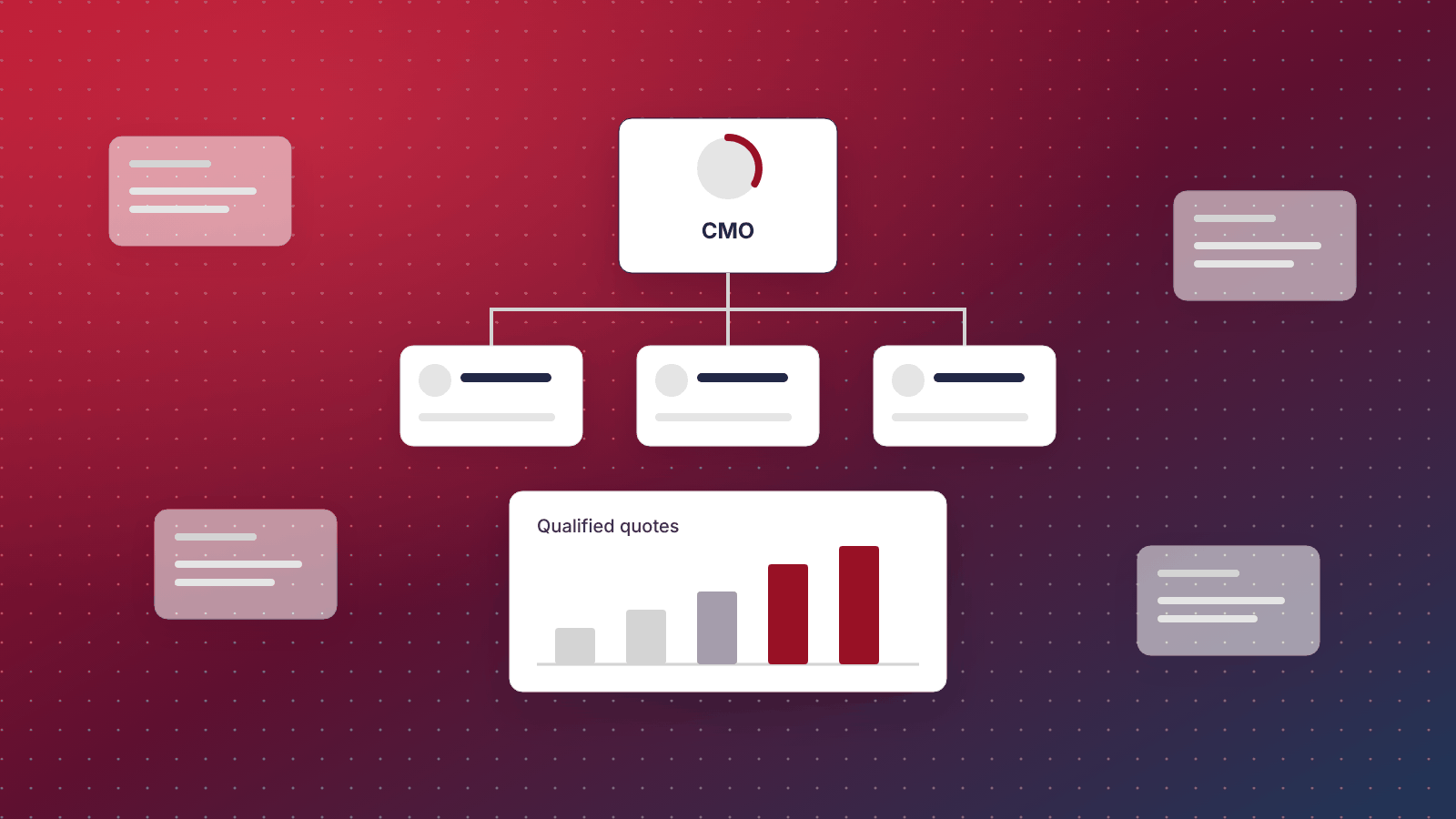
A fractional CMO is a senior marketing executive who works with your company part of the week and owns the results the way a full-time CMO would. For a $2M to $20M manufacturer or distributor, that usually means one person who finally owns the path from a stranger's first search to a qualified quote request, and the numbers that show whether it's working. Here's what that looks like day to day, what a fractional CMO doesn't do, how to tell if you need one, and what the first 90 days should produce.
What a fractional CMO is
A CMO (chief marketing officer) is the executive who owns marketing: the strategy, the budget, the team and the results. "Fractional" means you get that person for part of the week, usually on a monthly retainer, instead of hiring them full time.
What makes it a leadership role is ownership. A fractional CMO sits in your leadership meetings, makes the marketing decisions, directs whoever does the work and answers for the pipeline. That's what separates the role from the people you may already be paying:
| Owns the strategy | Owns the results | Does the hands-on work | |
|---|---|---|---|
| Marketing consultant | Recommends it | No | Rarely |
| Marketing agency | Within its own services | For its own channels | Yes |
| Marketing coordinator | No | No | Yes |
| Fractional CMO | Yes | Yes | Directs it |
If you're weighing those options against each other, our comparison of a fractional CMO, a full-time CMO and an agency goes through cost, speed and risk side by side.
Our help center has a plain-English guide to what a fractional CTO or CMO does, and when it beats hiring, and another on telling apart a coach, an advisor and a fractional executive.
What a fractional CMO does in a manufacturing company
The job description you'll find for a CMO at a software company doesn't fit a plant. Your buyers are engineers, purchasing teams and plant managers. They buy slowly, in groups, often against a drawing, and they can usually get the part somewhere else. A good fractional CMO for a manufacturer spends their time on five things.
Owns the path to the quote request
Most manufacturers already get some traffic. The question is what happens next: which page a buyer lands on, whether the capability and the certification are easy to find, how long the RFQ form is and how fast a person replies. The CMO owns that whole path and fixes the leaks first, because it's the cheapest growth you'll find. When we audited the quote request path on 150 manufacturer websites, the gaps were mostly basic ones that a senior owner would catch in a week.
Sets the positioning for each market you serve
A shop that serves medical, aerospace and agriculture needs three different stories, in the words each buyer uses. The CMO decides which markets to lead with, what you want to be known for in each, and makes sure the website, sales decks and trade show booth all say the same thing.
Decides where the budget goes
Trade shows, distributors and reps, LinkedIn, paid search, email to existing accounts, directories like Thomasnet: every channel has someone selling it. The CMO decides which ones earn their budget, cuts the ones that don't, and plans the follow-up, because a badge scan only becomes a quote when somebody calls.
Directs the people and agencies doing the work
In most $2M to $20M companies, marketing is a coordinator, an agency or two and the owner's spare evenings. The CMO turns that into a team with priorities: what each person or agency works on this month, what good looks like, and when to replace a vendor that isn't delivering.
Reports the numbers that matter to the owner
The CMO sets up a simple monthly view of inquiries, qualified quotes and won work by source, and brings it to the leadership meeting. That's how spend starts following results instead of habit. It's also how you'll know, after a few months, whether the CMO is worth what you pay them.
What a fractional CMO does not do
It helps to be clear about the limits, because mismatched expectations are the main reason these arrangements fail.
- They don't do all the work themselves. A CMO who spends the week writing blog posts and building ads isn't doing the CMO job. Someone has to do the hands-on work: your team, your agency or a team that comes with the CMO. Ask who that is before you sign.
- They don't replace sales. In manufacturing and distribution, sales relationships close most of the work. The CMO feeds sales and makes their job easier. The section on working with sales below covers how.
- They don't fix a product, pricing or capacity problem with marketing. If quotes are lost on price or lead time, more quote requests won't help. A good CMO will tell you that early.
- They aren't there every day. A fractional executive splits time across a few clients. Agree on response times and meeting rhythm up front so nobody is guessing.
Signs you need a fractional CMO
Answer these for your own company. A few "no" answers usually means the marketing has no senior owner, which is the gap a fractional CMO fills.
Does marketing have a senior owner?
Answer yes or no for your own company. Tap a question's name to read what a fractional CMO would own there.
0 of 6 answered
0 yes0 no
- The quote path
Does one person own what happens from a buyer's first visit to the reply on their quote request?
- Positioning
Could a stranger tell, in a few seconds, what you make and for which industries?
- Channels
Do you know which channel brought in last year's best new customers?
- Beyond referrals
Does new business come from more than referrals, reps and one or two trade shows?
- Direction
Do your coordinator and agencies work from one plan with clear priorities?
- The numbers
Does leadership see inquiries, qualified quotes and won work by source every month?
Your answers stay in this browser only.
If most answers are "yes", you probably don't need a CMO right now. A strong coordinator or a good agency may be enough until the next stage of growth.
The first 90 days
A fractional CMO should earn their keep inside the first quarter. Here's the rhythm we use with our own clients, and a fair standard to hold anyone to.
Part 1 · Weeks 1 to 4
Learn how you win work
Interview sales and recent customers, review the top accounts, walk the quote or ordering path as a buyer would and set a baseline for inquiries, quotes and online orders.
The test
You can see last quarter's inquiries, quotes and won work by source on one page.
- 2
Part 2 · Weeks 5 to 8
Fix the path
Why the quote path comes firstRewrite the pages and forms serious buyers use most, tighten qualifying questions and launch one follow-up or account-growth campaign.
Part 3 · Weeks 9 to 12
Set the plan
Agree the channel plan, the trade-show or supplier calendar and the monthly scorecard, and start the cadence the team runs with you from month four.
The test
You understand the plan well enough to explain it to your sales team.
By day 90 you should have three things on paper: a baseline for inquiries, quotes and won work by source, a short list of fixes already shipped, and a channel plan for the next two quarters that you understand and agree with. If you don't, that's worth a direct conversation.
How a fractional CMO works with sales
In a manufacturer or distributor, marketing that ignores the sales team doesn't work. Reps know which accounts are worth growing, which questions buyers ask and why quotes are lost. A good fractional CMO starts by interviewing them and builds the plan with sales leadership instead of around it.
In practice that means a shared definition of a qualified inquiry, a quick handoff so a quote request reaches the right person the same day, and a monthly look at won and lost quotes by source. When sales and marketing count the same things, the arguments about lead quality get shorter.
Questions about fractional CMOs
What is a fractional CMO?
A fractional CMO is a senior marketing executive who works with your company part of the week instead of full time. They set the marketing strategy, own the pipeline numbers, manage the people and agencies doing the work, and report to the owner or CEO like any other executive.
What's the difference between a fractional CMO and a marketing consultant?
A consultant gives advice and leaves the decisions and the results with you. A fractional CMO makes the marketing decisions, directs the work and answers for the numbers month after month.
How many hours a week does a fractional CMO work?
It varies by provider and by what the company needs. Many arrangements are described as one or two days a week, and some are a few hours. Ask what the person will own and how quickly they'll respond, because availability matters more than a count of hours.
Does a fractional CMO do the marketing work themselves?
Some do a little of it, but their job is to decide what gets done and make sure it happens. Most rely on your team, an agency or their own team for the writing, design, ads and web work. Ask who does the work before you sign, because a CMO with nobody to direct ends up writing plans that sit in a drawer.
Is a fractional CMO worth it for a manufacturer?
It's worth it when marketing is a real growth lever and nobody senior owns it. Signs include a pipeline that depends on referrals and a few reps, quote requests that are often the wrong fit, and spend nobody can tie to won work. If one channel already fills the plant, you may not need one yet.
For what it costs, see what a fractional CMO costs in 2026.
Keep reading
 Branding & Digital Marketing
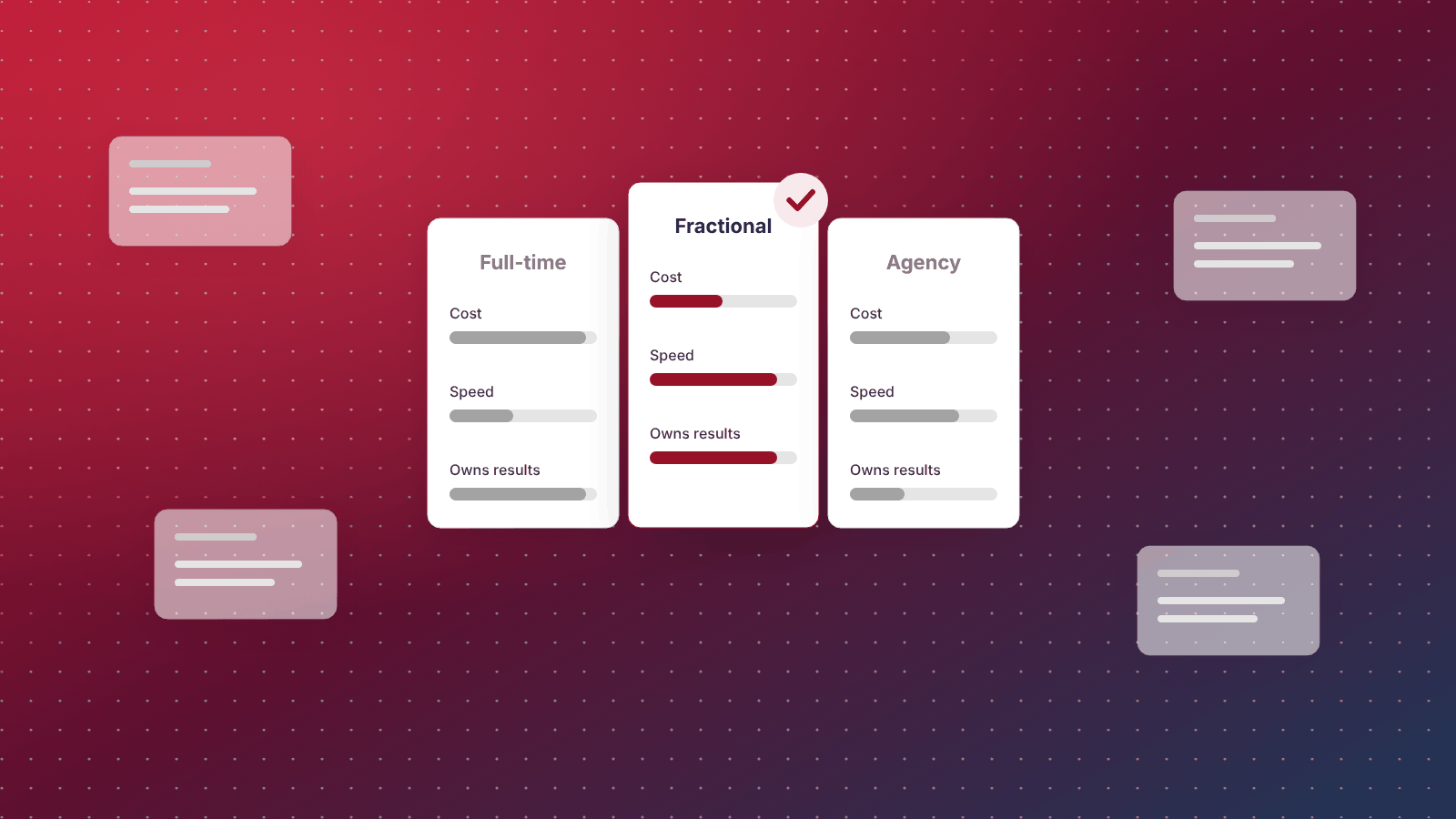
Fractional CMO vs Full-Time CMO vs Agency: Which Fits Your Company
A side-by-side look at a fractional CMO, a full-time CMO and a marketing agency for a $2M to $20M B2B company: what each costs, how fast each starts, who owns the results, and which one fits your stage.
 Branding & Digital Marketing
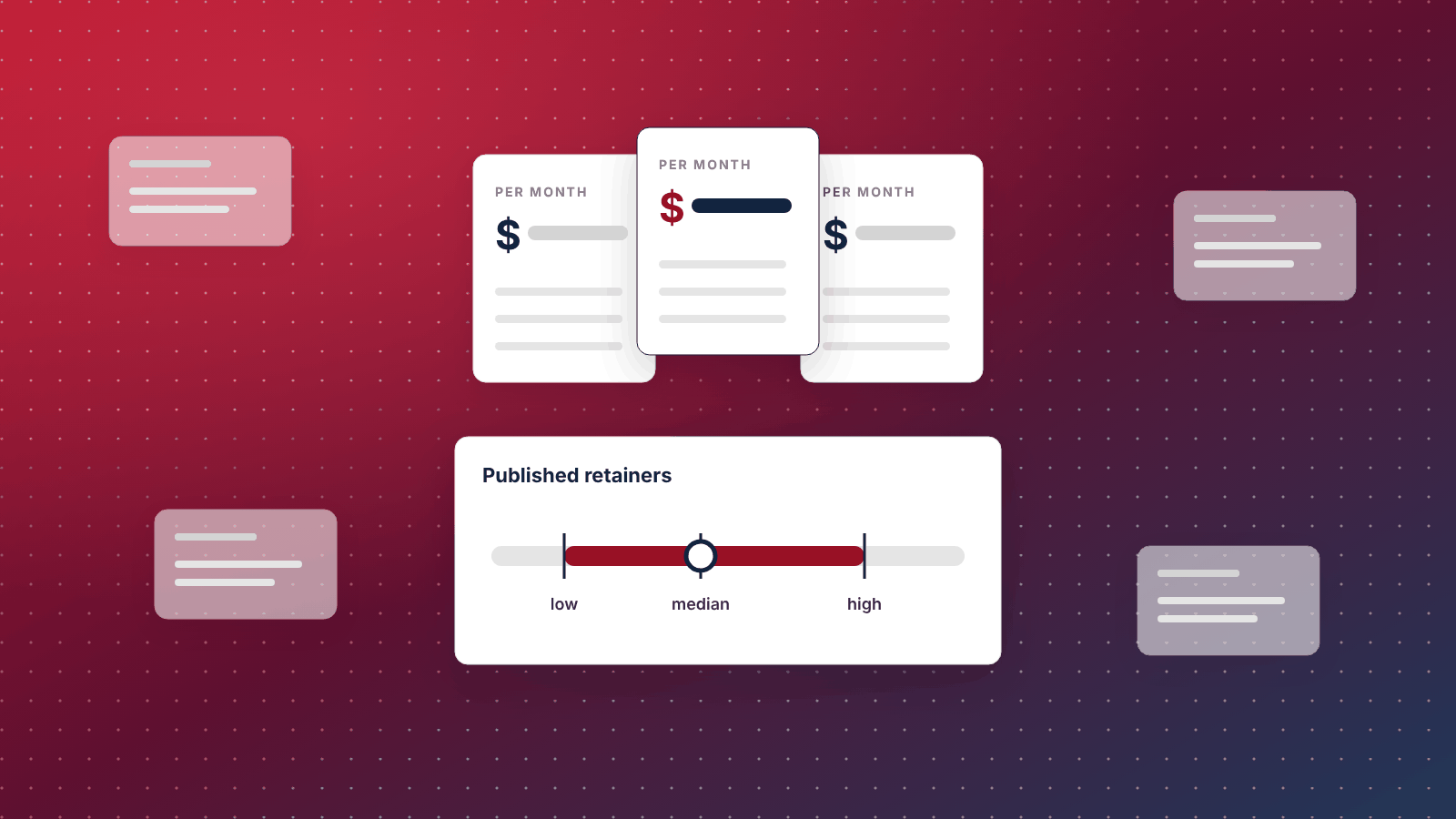
What a Fractional CMO Costs in 2026: We Checked 48 Providers
We read the pricing pages of 48 US fractional CMO providers. About a third don't publish their own fee. Among those that do, the median starting price is $4,000 a month and the median top of range is $12,000. Here's what the numbers say, how they compare with a full-time CMO and an agency, and what to ask before you sign.
 Branding & Digital Marketing
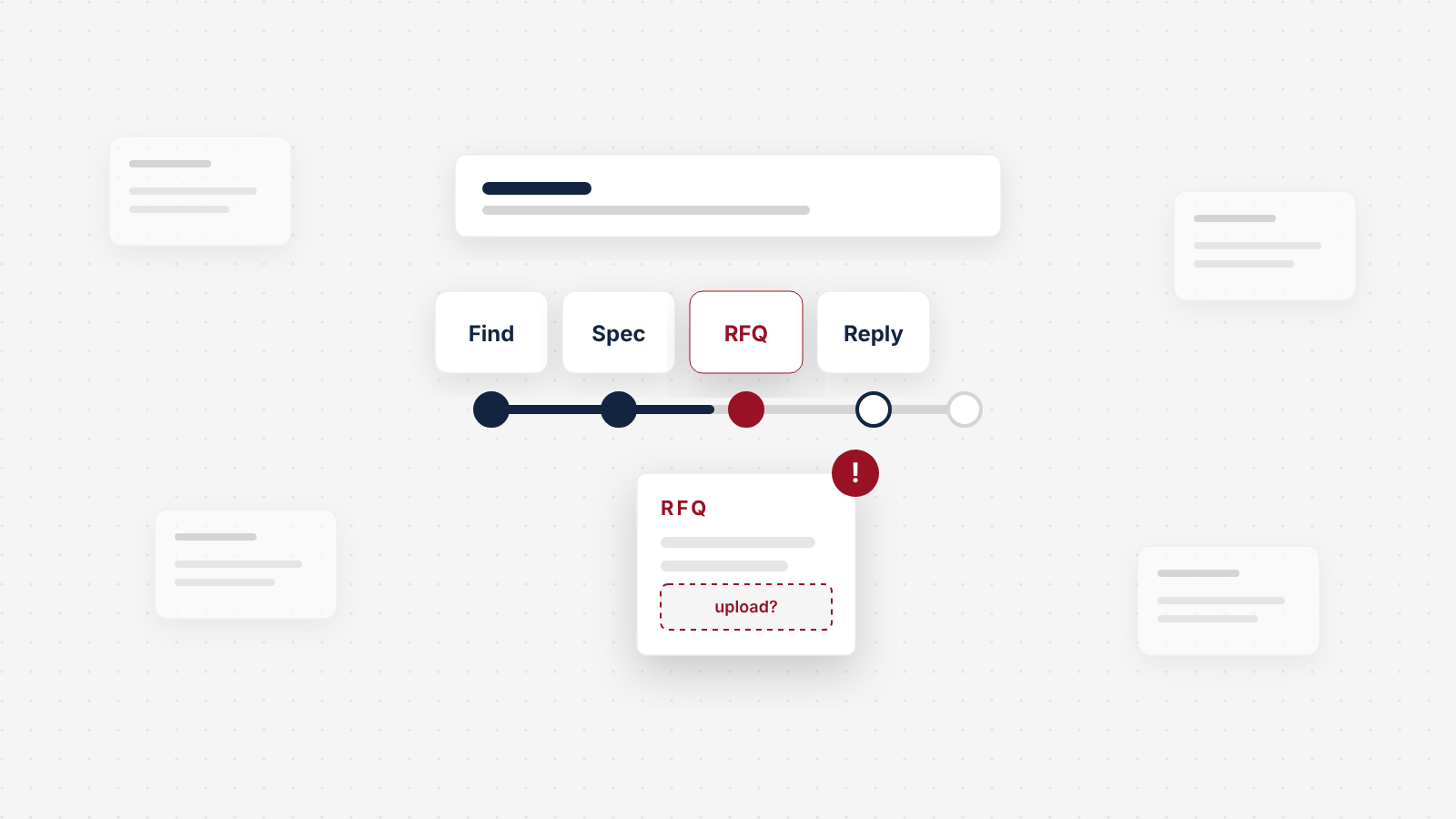
Where Your Quote Requests Stall: A 12-Question Manufacturing Lead Generation Check
Most manufacturing lead generation advice is a list of ways to get more traffic. Before you buy more, find out where the interest you already have stops. Here are twelve questions that trace a quote request from the first click to the estimator's desk, and what to fix at each one.
See exactly where your site is losing conversions
Paste your URL and get an instant conversion score. No form to fill out, no sales call.
Strategies for businesses building what's next.
Occasional notes on turning B2B websites into pipeline. Unsubscribe any time.

