
We Audited the Quote Request Path on 150 Manufacturer Websites
We checked how 150 US manufacturers handle the moment a buyer wants a quote: the form, the file upload, the reply promise, the specs and proof around it, and the email behind it. About half have a dedicated quote form. Only 7% say when they'll reply. Here's what we found, sector by sector, and a 10-point check for your own site.
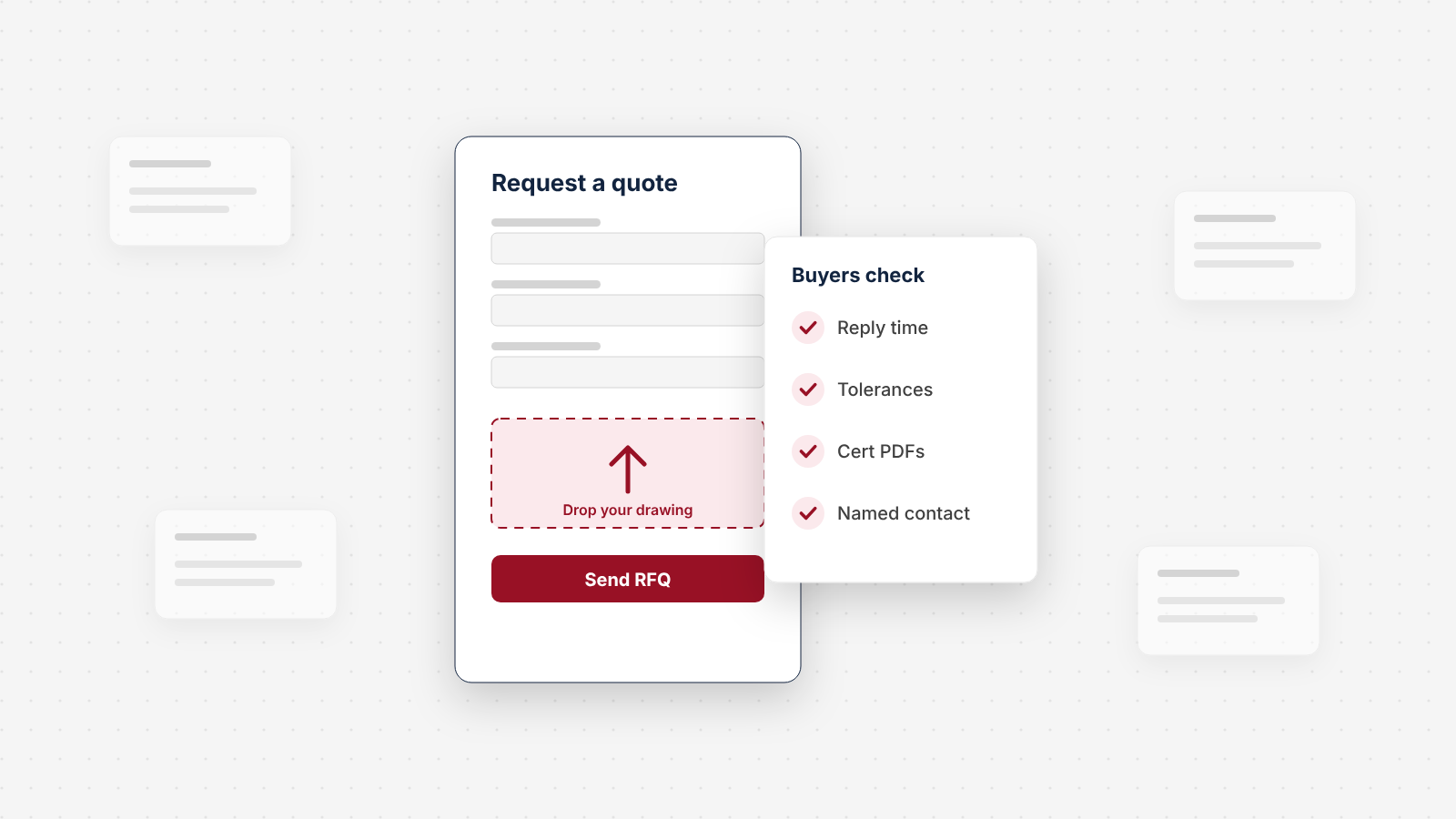
An engineer finds your site, likes what they see, and has a drawing ready to send. On about half of the 150 manufacturer websites we audited, there was no dedicated place to send it. Where there was a quote form, it usually took a file but rarely said which formats. And only 7% of all 150 sites told the buyer when they'd hear back. The quote request is the moment the website's whole job comes down to, and on most of these sites it's the least finished part.
We've written before about what manufacturing buyers check on your website before they send an RFQ, and about where quote requests stall once they're sent. Both drew on other people's research. This time we wanted our own numbers, so we went and counted.
What we checked
We audited 150 US manufacturer websites: 50 precision machining shops, 50 spring and wire form makers, and 50 food and packaging producers. For each one we followed the path a buyer takes toward a quote and recorded:
- Whether there's a dedicated quote request form, separate from a general contact form
- Whether the inquiry form accepts a file upload, and whether it says which file types
- Whether the site promises a reply time
- Whether a named person appears on the inquiry page
- Whether certifications are mentioned, and whether the certificate itself is linked
- Whether the site states a numeric tolerance
- Whether there are case studies with real numbers in them
- Whether the homepage has an H1 heading
- The domain's email authentication: DMARC and SPF
- Whether robots.txt blocks AI crawlers
We don't name any of the companies. This is about patterns, and plenty of these sites belong to good shops. The method and its limits are at the end.
About half have a place to ask for a quote
Of the 137 sites where we could tell for certain, 49% (67) had a dedicated quote request form. Allow about five points either way for that. The rest relied on a general contact form, an email address, or a phone number.
The gap between sectors is wide.
Share of manufacturer websites with a dedicated quote request form
A general contact form treats a buyer with a drawing and a deadline the same as a job seeker or a software vendor, and gives your team nothing to route on. A dedicated form tells the buyer you quote work like theirs.
Most quote forms take a file, but few say which kind
File upload is the field that matters most for custom work, because the drawing is the request. Across every inquiry form we could parse, at least 39% (47 of 119) accepted an upload. On dedicated quote forms, at least 69% (42 of 61) did. We say "at least" because some forms only load with JavaScript, which our first pass didn't run, so the true share is probably a little higher.
By sector, about 55% of the machining and components forms took a file. Food and packaging forms almost never did.
The gap we didn't expect was in the details. Of the forms with an upload field, few said which file types they accept, and only about 1 in 6 named STEP (a small count, so treat it as rough). An engineer holding a STEP file and looking at a button that says only "Attach file" has to guess whether it'll go through.
Hardly anyone says when they'll reply
This was the number that surprised us most.
A buyer sending an RFQ to a new supplier doesn't know if it goes to an estimator, a shared inbox, or nowhere. A line next to the submit button that says when they'll hear back, and from whom, takes that worry away. It costs nothing to write. Keeping the promise is the hard part, and if your team can't keep a 24-hour promise yet, that's worth knowing too.
The "from whom" part was rare as well. About 16% of sites (23 of 142 we could check) showed a named person on the inquiry page. Everyone else offered a form, a generic address, or a main phone number. A name tells the buyer a real person reads these requests.
The proof is thin, and food and packaging is thinnest
Before sending a drawing, a buyer wants evidence you can make the part. We looked at three kinds.
Certifications. 61% of sites (91 of 150) mention a certification, such as ISO 9001 or a food safety standard. We counted mentions; we didn't verify whether each company holds what it lists. Of the sites that mention one, 52% link to a certificate PDF a buyer can download. None of the 20 food and packaging sites that mention a certification link to the certificate. For a purchasing team working through an approved-supplier checklist, a logo is a claim and the PDF is the evidence.
Tolerances. This is the number an engineer looks for first on a machining site, and most sites don't give it.
Sites that state a numeric tolerance anywhere we crawled
About three out of four machining shops in our sample don't say what they hold. Nobody wants a buyer quoting off a best-ever number, but the tolerance you hold every day is what the engineer is trying to check. If the site doesn't say, they have to ask, or assume you can't.
Case studies with real numbers. Almost none. We found 3 among 150 sites. Plenty of sites had project galleries, but almost nothing that gave the part, material, quantity and lead time. It's one of the easiest gaps to close, because every shop has finished jobs it could describe.
Small technical gaps that add up
Homepages with no H1. 26% of homepages (39 of 150) have no H1 heading. The H1 is a page's main heading, and search engines and AI tools use it to work out what the page is about. Missing it won't sink a site by itself, but it's a sign nobody has looked under the hood in a while.
AI crawlers. None of the 150 sites block AI crawlers in robots.txt. We didn't test firewall-level blocking, so some may block them another way. Either way, their content is available to AI answer engines, and what those tools say about a supplier comes from what its site says. Missing specs and vague capability pages get repeated there too.
The email behind the quote form is easy to fake
After the buyer clicks submit, quotes, purchase orders and invoices go back and forth by email, so we checked how each company's email domain is protected.
DMARC tells other mail servers what to do with email that claims to come from your domain but fails its checks. Without an enforced policy, a criminal can send a fake quote or a fake "our bank details have changed" invoice to your customers from an address that looks like yours. That's a known pattern in quote and invoice fraud.
SPF, the record that lists which servers may send for your domain, was in better shape: only 5% had it missing or invalid. So most of these companies have done the first step and not the second. Our help guide to DMARC records covers the basics, and whoever runs your IT or email can usually move DMARC to enforcement in stages without breaking anything.
What this means for your quote path
The quote path is built for one buyer above all: an engineer with a drawing, on a deadline, with four other suppliers open in other tabs. They want to send the drawing now, in the format they already have. They want to know when they'll hear back, and from whom. Before they send it, they want to see that you can make the part (your tolerances, part sizes and materials) and that you've proven it (a certificate they can download, a job like theirs with real numbers).
With only 7% promising a reply time, at least 93% of the sites we audited miss something on that list. Most of the gaps are cheap to fix compared with a buyer who never sends the request.
Food and packaging producers lag on every quote-path measure we took: fewer dedicated forms, almost no upload fields, no linked certificates. Their buyers bring a spec sheet, a run size and packaging details instead of a STEP file, but they still need somewhere clear to send it all, and a reason to trust the plant. If you're in that sector, the bar is low, and clearing it would set you apart.
If you've watched your shop lose quotes to competitors who aren't any better at the work, that's frustrating. The quote path is a good place to start looking, because the other site may have made it easier to ask.
Check your own site: 10 points
Each line maps to one of our measures. Open your site in a private window, on your phone, and go through it as a buyer would.
The 10-point quote path check
Then send yourself a test RFQ from your phone with a real drawing attached, and check that it arrives, with the file, in the right inbox.
How we did this
Sample. 150 US manufacturers from three association member lists: 50 precision machining shops from a Minnesota precision manufacturers association, 50 spring and wire form makers, and 50 food and packaging producers (co-packers and processors). We didn't verify revenue, and the sample skews regional, so treat the results as a picture of these 150 companies, not of all US manufacturing.
Collection. We collected the data on October 14, 2026, with an automated crawl of up to 8 pages per site, following links from the homepage toward contact, quote, capability and quality pages. Email records came from public DNS lookups, rechecked on two separate resolvers. AI crawler blocking was checked in robots.txt only.
Hand-check. We checked 30 randomly chosen sites by hand on 13 fields and agreed with the crawler 96.7% of the time. We found two known crawler errors, checked 30 more rows specifically for those, and corrected them.
Limits. The first pass didn't render JavaScript, so forms that only load with JavaScript may be undercounted. That's why we give file upload figures as "at least," and why some sites have an unknown status for the quote form and named-person measures. With 8 pages per site, we may have missed a tolerance or case study buried deeper. Where a count is small, we say "about" or "almost none" instead of a precise percentage. We recorded what each site says, not whether it's true.
Questions about the study
How many manufacturer websites have a request for quote form?
About half. In our October 2026 audit of 150 US manufacturers, 49% had a dedicated quote request form (67 of 137 sites with known status): 55% of precision machining shops, 62% of spring and wire form makers, and 26% of food and packaging producers.
Should an RFQ form have a file upload?
Yes, if your buyers quote from drawings. In our audit, at least 69% of dedicated quote forms had an upload field, but few said which file types they accept, and only about 1 in 6 named STEP. Name the formats you take, such as PDF, STEP and DWG, and the size limit.
Should a manufacturer say how fast it replies to a quote request?
Yes. Only 7% of the 150 sites we audited made any reply-time promise. A short line by the submit button, with a time you can keep and the name of who'll reply, tells the buyer the request won't vanish into an inbox.
What is DMARC and why does it matter for a manufacturer?
DMARC is a DNS record that tells mail servers what to do with email that claims to be from your domain but fails its checks. Without enforcement, it's easier for someone to send email pretending to be you, a known risk in quote and invoice fraud. In our audit, 59% of manufacturers didn't enforce it.
Which manufacturers were in the study?
150 US manufacturers from three association member lists: 50 precision machining shops, 50 spring and wire form makers, and 50 food and packaging producers. We didn't verify revenue, and the sample skews regional, so the numbers describe these 150 companies, not all US manufacturing.
Keep reading
 UX & Web Design
We Read 79 Website RFPs. Here's What They Ask For
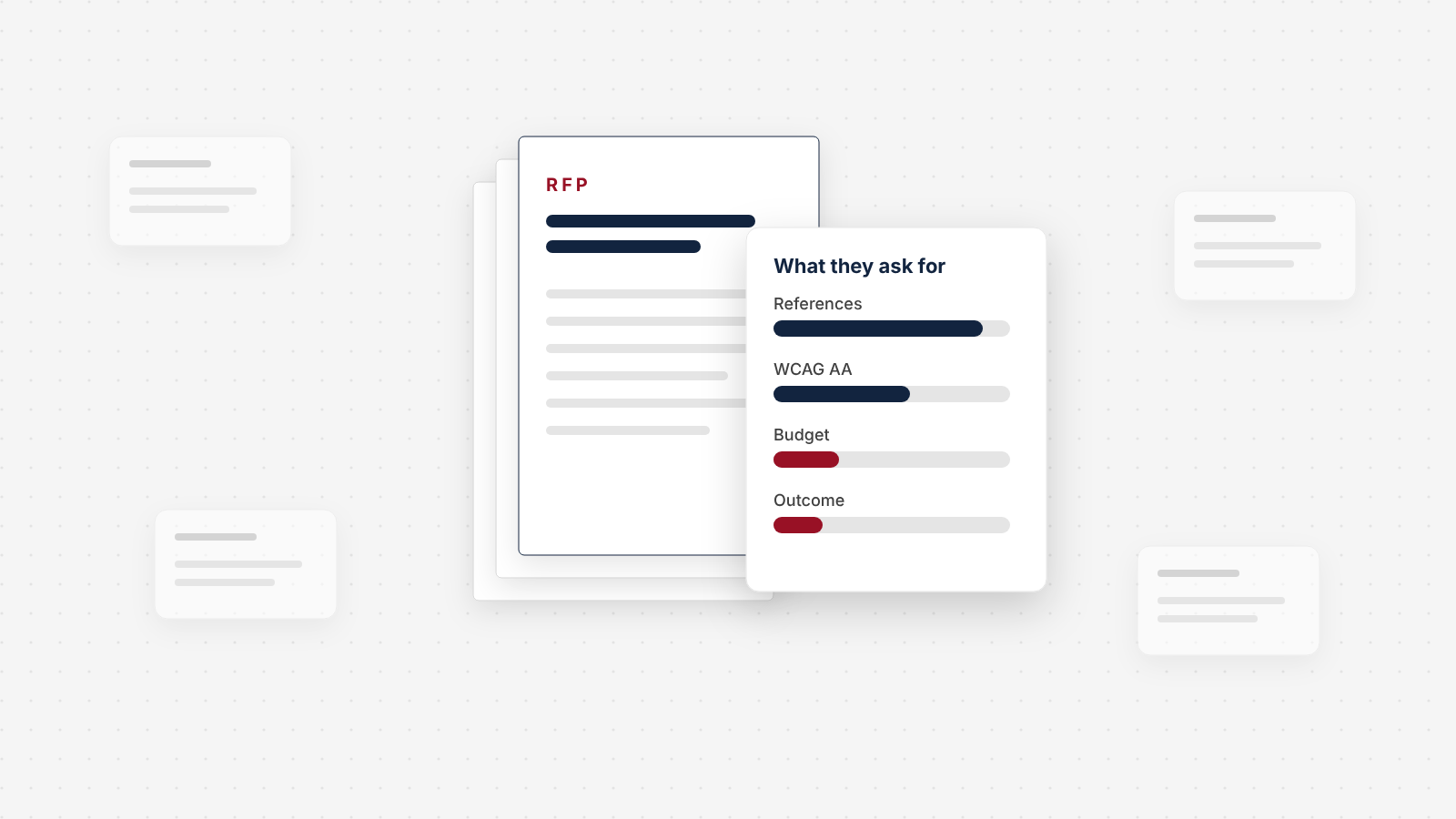
Our study of 79 public website redesign RFPs from 2024 to 2026: how often they state a budget, how little price counts in the score, and how few say what the new site has to achieve.
 UX & Web Design
What a B2B Website Redesign Really Costs
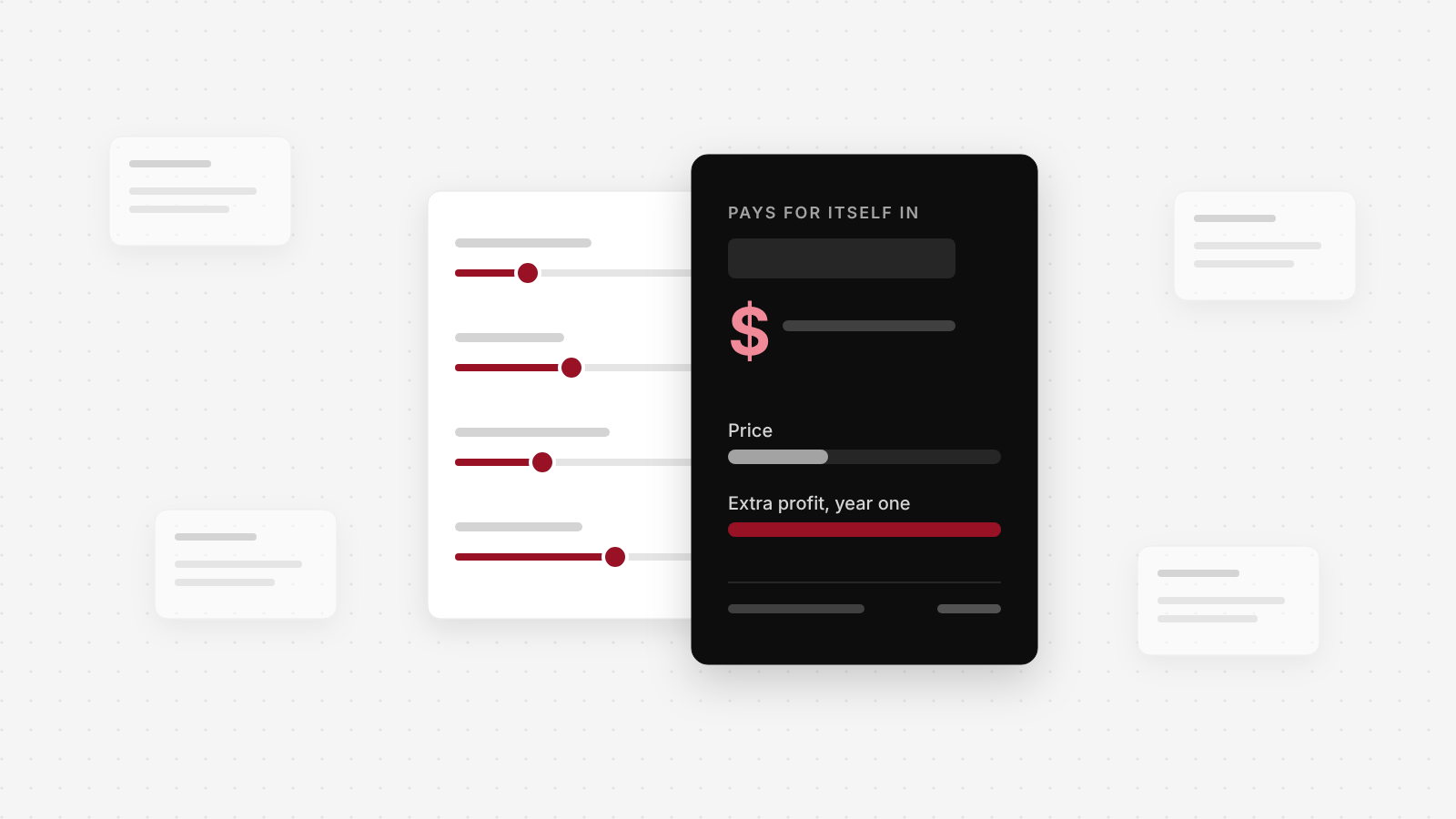
Published guides put most B2B redesigns between $50,000 and $150,000, and not one shows its data. Here's our own price, what it buys, and a calculator for the bigger number: what your current site costs you every month.
 UX & Web Design
Food and Beverage Manufacturer Websites: What Buyers Check Before They Call
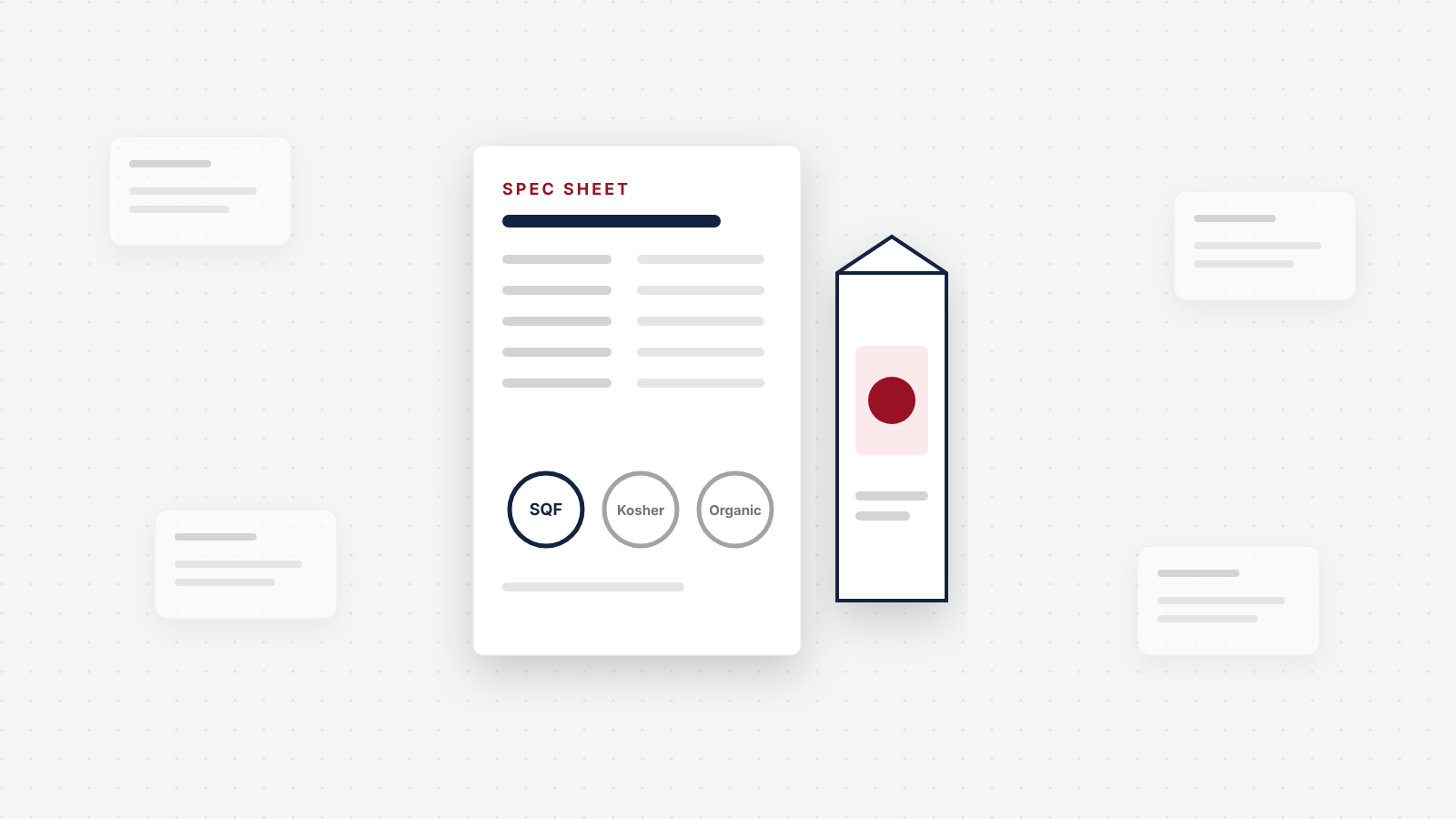
Most food website advice is written for consumer brands. This is the supplier side: what a brand's quality, procurement and R&D people check on a co-packer, ingredient supplier or private label site, and the pages, documents and certification details that keep you on their list.
Ready to talk about your site?
Book a call with Chykalophia. We focus on your business, your goals and what is in the way, and tell you fast if we are a fit.
Strategies for businesses building what's next.
The Next Draft: occasional notes on turning B2B websites into pipeline. Unsubscribe any time.